
One Incorporated Place Changes Routing
Byrdstown is the only incorporated town in Pickett County. So a mailing address tells you almost nothing about court routing. A citation with a Byrdstown address might sit in General Sessions, Circuit, Criminal, Chancery, probate, or Juvenile Court. Someone living outside town can still list Byrdstown as the mailing city. The whole case stays with the county. Ask a different question: which court is printed on the paper? The town on the envelope is a distraction.
If the paperwork is unclear, make two calls. Town Hall can tell you whether the matter involves town business at all, and the Circuit Court Clerk can route General Sessions, Circuit, and Criminal inquiries to the right docket. That approach beats assuming anything filed inside Byrdstown must be municipal.
Searching the Pickett County Court Docket
Begin with whatever paper started the case. It might be a citation, summons, notice, pleading, indictment, or an earlier order. Copy the court name and the case number letter for letter. For Pickett County Circuit Court, Criminal Court, or General Sessions Court, the office is the Circuit Court Clerk, Danny Huddleston, at 1 Courthouse Square, Suite 100, Byrdstown, Tennessee 38549. The phone number is 931-864-3958. Chancery and probate files run through Clerk and Master Leana Neal in Suite 203. Her number is 931-864-3359.
- Identify the court division from the latest official document.
- Gather the case number, full caption or party names, filing year, and approximate date range.
- Ask the correct clerk for the public docket and current setting.
- Specify any pleading, order, judgment, or certified copy needed in addition to the docket.
- Confirm the date, time, courtroom, and status directly before travel.
The Pickett County officials directory lists the local contacts in one place. Not sure which division you need? Describe the matter plainly instead of guessing at the court. A traffic citation or a small civil claim often stays in General Sessions. A felony record can move up to Criminal Court. A probate file belongs with the Clerk and Master.
Pickett Has No Trial Search Portal
Here is the key search fact for Pickett County. No online trial-court portal publishes county dockets for searching by name or case number. The Tennessee Public Court Records System lists its participating counties, and Pickett is not among them. That gap does not make a case private, missing, or dismissed. It just means the docket search moves offline. Try the clerk, the courthouse file, or a records request.
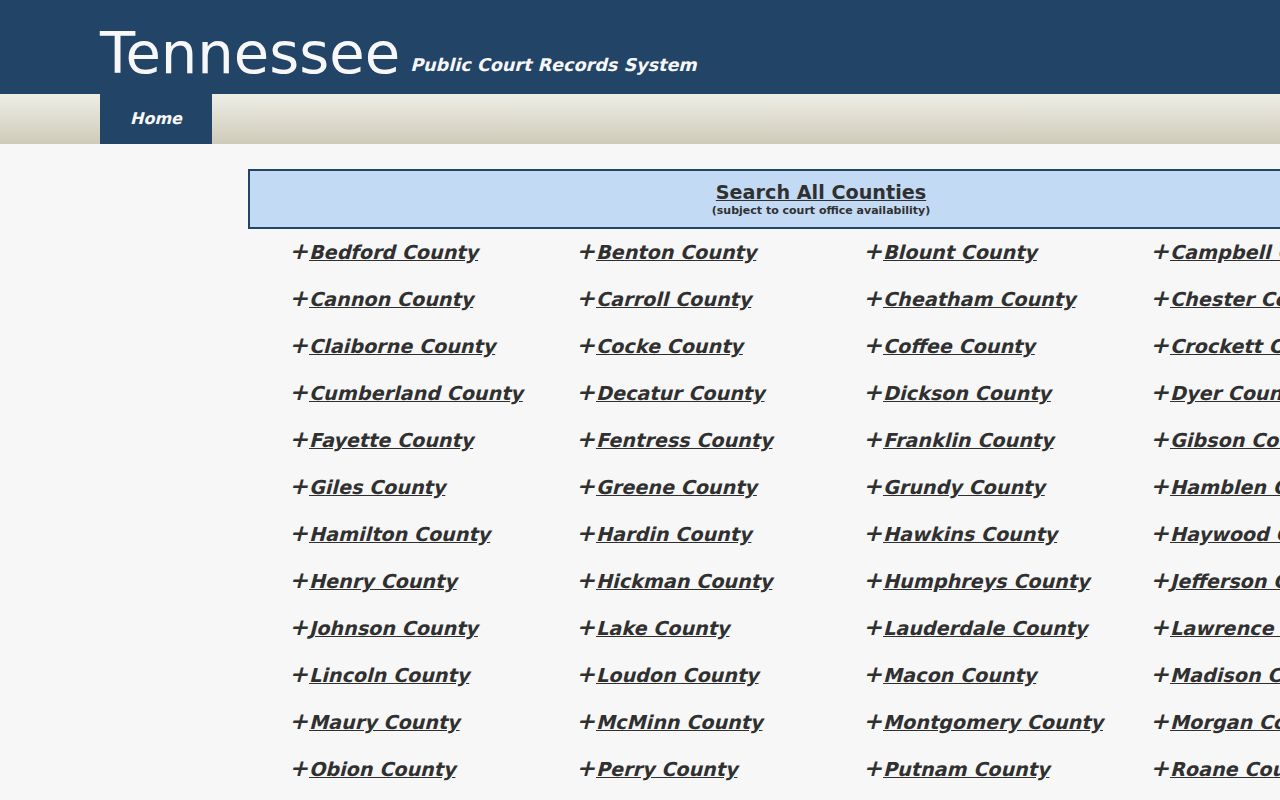
The participating-county menu is useful only for context. It shows why another Tennessee county has an online lookup tool and Pickett does not. Never pick a neighboring county and treat its results as Pickett court records.
If no web result appears: verify the court, call the correct clerk, ask whether the file is current, paper, archived, or on microfilm, and distinguish a public docket from the documents listed behind it.
Inside a Pickett County Court Docket
Think of a docket as the court's running index. It is a chronology of everything that has touched the file. In Pickett County it may show the court and division, case number, filing date, case type, formal caption, parties, attorneys, judge, current status, settings, and disposition. Entries appear in order. They can include complaints, petitions, citations, summonses, returns, answers, motions, notices, hearings, continuances, orders, judgments, and appeal activity. Money fields, where a court keeps them, cover costs, fines, restitution, bond, judgment amounts, payments, and balances.
Pickett publishes no local case-number pattern or shorthand glossary. So do not read Tennessee's appellate format as a trial number. If a notice is confusing, ask the clerk. Have the local number read back to you. And note that an entry saying an order was filed is not the signed order itself; that document must be requested separately.
| Header | Court, division, case number, filing date, type, caption, judge, and status. |
|---|---|
| Parties | Plaintiff and defendant, petitioner and respondent, or State and defendant. |
| History | Filed papers, notices, settings, continuances, orders, and judgments in date order. |
| Setting | Date, time, location, judge, and setting type when recorded. |
| Result | Disposition wording and date; the signed judgment controls exact terms. |
Pickett Courthouse Desk by Desk
Pickett County puts nearly everything under one roof. The Tennessee AOC courthouse directory covers Circuit, Criminal, and Chancery Courts. It places all three at 1 Courthouse Square in Byrdstown. That one building holds the whole court docket operation. The lower level houses the Circuit Court Clerk, while the main level holds administrative offices. Upstairs sit the courtroom, the sheriff, and the jail. So “go to the courthouse” only works once you know which desk you need.
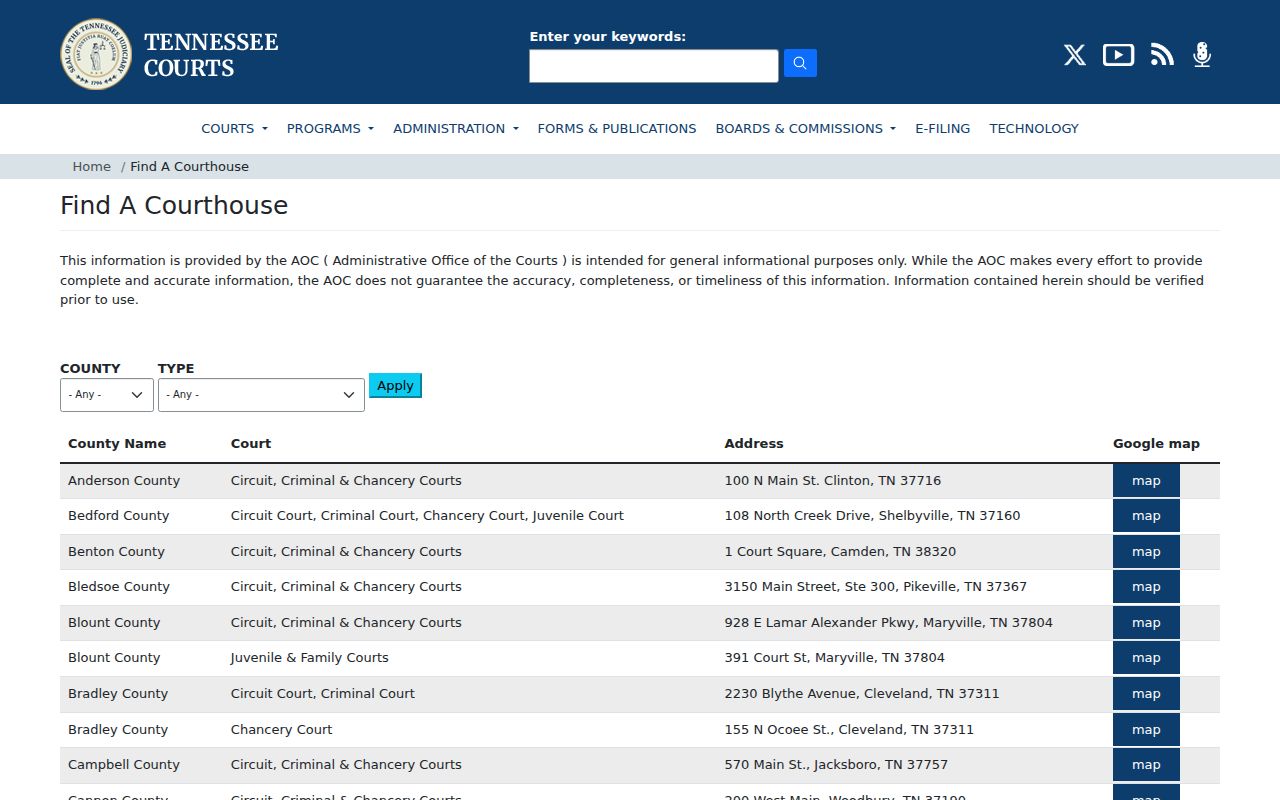
The directory finds the building. The county office list gets you to the right door, Suite 100 for the Circuit Court Clerk and Suite 203 for the Clerk and Master. Before visiting, gather the court name, case number, caption, date range, the record you want, any identification policy asks for, and a copy preference. Hours, security, accessibility, file retrieval time, and certification charges are worth asking about in advance. The county courthouse FAQ walks through the building layout.

A trip to the courthouse can pair a file inspection with a copy request. Whether a public terminal exists there has not been established, so call first before counting on a kiosk or same-day retrieval.
Courts That Keep Dockets in Pickett County
Pickett County sits in Tennessee's Thirteenth Judicial District. Circuit Court covers general civil jurisdiction plus whatever the law assigns it. Criminal Court, a separate division, takes the felony cases. Chancery Court handles equity along with divorce, probate, guardianship, adoption, and property disputes. General Sessions Court covers limited civil claims, misdemeanors, preliminary criminal proceedings, and the traffic work Tennessee law assigns. Juvenile Court holds protected juvenile jurisdiction.
Circuit and Criminal: route records through the Circuit Court Clerk.
General Sessions: use the local trial-clerk structure and confirm the particular counter.
Chancery and probate: route records through the Clerk and Master.
Juvenile: ask the court about lawful access; do not expect ordinary public name searching.
Appeals: search Tennessee Public Case History after the appellate record is filed.
Do not assume Byrdstown still runs a Municipal Court. No current city material names one, and a 2010 Tennessee municipal directory listed
Confirm routing with Town Hall. Then use the General Sessions or county division printed on the citation.
Pickett Docket Flow by Case Type
The court level controls where a Pickett docket lives, not where the event happened. A lower criminal matter can open in General Sessions. After bind-over it moves to Criminal Court, and an appeal can later reach the Tennessee Court of Criminal Appeals. A civil case starts in General Sessions or Circuit Court depending on jurisdiction. Chancery and probate follow the Clerk and Master route. Federal cases arising in Pickett sit outside this state-court chain entirely, in the U.S. District Court for the Middle District of Tennessee's Northeastern Division.
Local criminal flow: General Sessions › Pickett County Criminal Court › Tennessee Court of Criminal Appeals › Tennessee Supreme Court
Local civil flow: General Sessions or Circuit/Chancery › Tennessee Court of Appeals › Tennessee Supreme Court
This routing is why a statewide appellate match cannot stand in for the original Pickett record. The appellate system shows procedural history and permitted PDFs. The local clerk holds the trial docket, exhibits, and certified trial documents.
How to Find Court Dates and Settings
Never trust an old notice for a current court date. Confirm every setting with the Pickett clerk or a notice the court itself issued. The statewide AOC calendar covers events and appellate oral arguments. It is not Pickett's daily trial calendar. Local Chancery rules set regular sessions on the third Mondays in March and September. The same rules require clerk-prepared daily trial calendars, and they call for written notice after a setting. Those sessions do not fix the date of every case.
When you call the clerk, ask for the date, time, courtroom, judge, and setting type. Ask whether a later order reset or continued the matter, too. A docket setting or calendar call may just organize later proceedings. It may not serve as the trial itself. A reset is not a dismissal. A continuance needs court approval under the applicable rules. Simply not showing up is never an informal way to move a date.
Use Pickett County court dates for a calendar checklist. If a setting was missed, contact the clerk and counsel promptly. Ask what order or warrant entry was made, and follow official instructions rather than an outdated notice.
Appellate Case History Is Different
Appeals move to a different system. Tennessee Public Case History searches the Tennessee Supreme Court. It also covers the Court of Appeals and the Court of Criminal Appeals. You can search by case number, case style, party name, or business and organization. The AOC describes coverage for appeals with records filed after September 1, 2006. The data is generally current through the prior business day. Permitted PDFs may appear beside the events on that page.
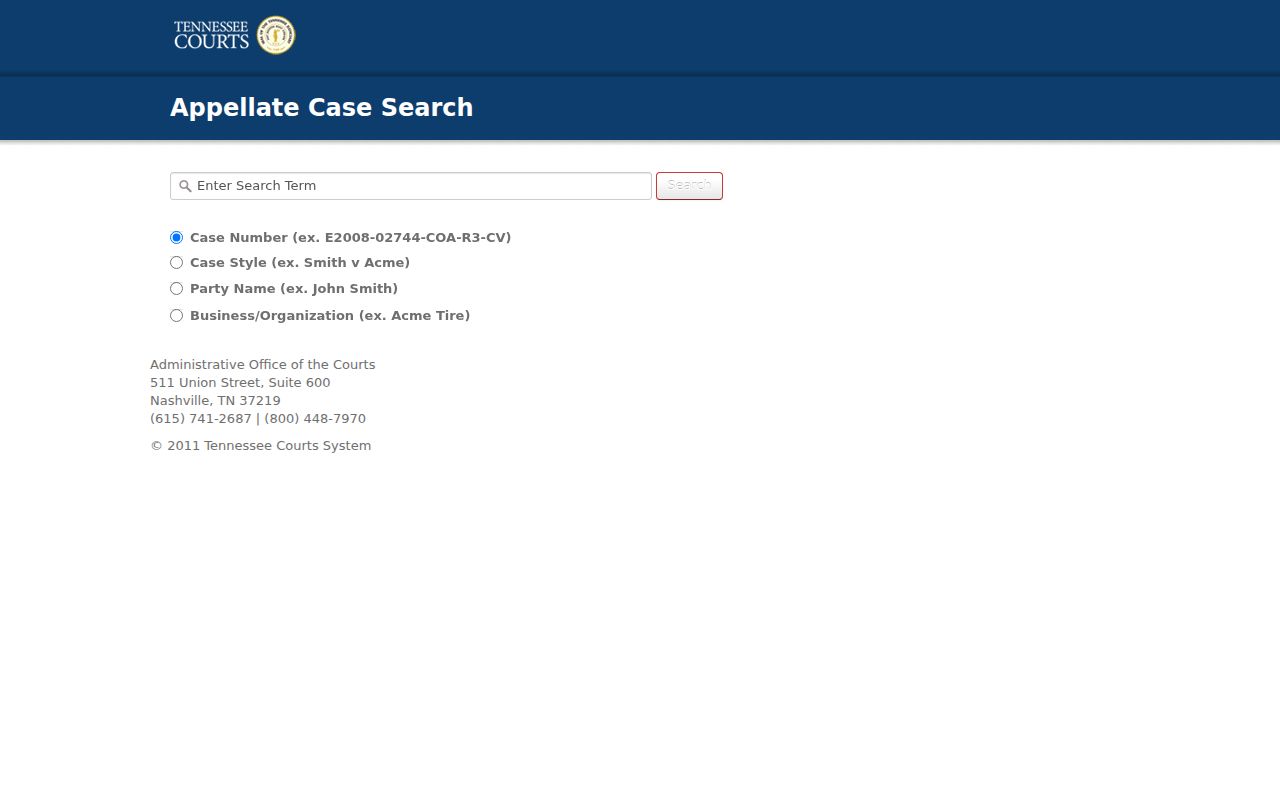
The form only helps once a Pickett matter has become an appeal. Results can include the appellate case number, court, originating case number, style, assigned judge, record filing, briefs, submission, decisions, mandate, and allowed documents. For the original trial file, go back to the Pickett clerk. The Pickett County case lookup explains both channels without mixing them.
Docket Records at the Clerk's Office
The clerk manages the docket and keeps the official case record, so requests go there. Ask for inspection when reading the open record is enough. Ask for a plain copy when you need an ordinary reproduction. Request certification only when an authenticated record is required. County policy lists $0.15 per black-and-white page and $0.50 per color page for general copies. An itemized estimate and advance payment apply when costs exceed $5. Court certification charges must be confirmed separately.
A precise written request names the court. It should also give the case number or caption, filing year, document, date range, and delivery preference. County policy permits delivery in person, by mail, email, or fax subject to office instructions. It also permits proof of Tennessee citizenship with acceptable identification. When prompt production is impracticable, the office must act in writing within seven business days. It may produce the record, deny it with a basis, or explain the time needed. That is a response period, not a delivery guarantee.
Public Access to Court Dockets
Tennessee Supreme Court Rule 34 generally supports inspection of court records, but it recognizes statutes, court rules, protective orders, sealing orders, and judicial-function exceptions. The Tennessee Public Records Act adds its own access framework. County policy then handles the details: specificity, citizenship verification, redaction, fees, delivery, and written responses.
Access is record-specific. Sealed documents, protected juvenile information, personal identifiers, unpublished judicial work, and material made confidential by statute are not opened by a general request. A public docket may show that a restricted entry exists while withholding the attached paper.
If access is denied, ask for the legal basis. Ask whether a redacted version could be released instead. Failing to find a Pickett case online is not proof of sealing in a county with no trial portal. The file may sit with another clerk, live on paper or microfilm, carry a different caption, or fall outside the date range you requested.
Older Pickett Files Need Date Ranges
The Tennessee State Library and Archives lists Pickett materials within county microfilm inventories. Historical researchers should start with an approximate year. The court, names, record series, and the event sought come next. The current clerk can say whether the office, archive, or library holds the relevant series. The clerk can also say who may provide certification.
Older records reward a series-based request. Think minute book, order book, probate file, civil case file, criminal case file, index, or judgment record. Name spellings and captions change over time. Offer variants instead of asking for every occurrence of a common surname. A microfilm reference is a discovery lead, not proof of present case status.
Pickett Court Activity in Context
Aggregate AOC statistics describe workload, not private case histories. For fiscal year 2024-25, the Pickett Circuit civil table reported 73 filings and 60 dispositions. Contract, Debt, and Specific Performance accounted for 46 filings. The criminal count table reported 57 counts filed and 60 disposed. Counts are not the same as cases. The report warns totals may be incomplete when data was not received.
Those totals explain the mix a Pickett clerk handles. No statistic establishes the status or result of an individual case; use a case-specific docket and a signed order for that.
Pickett County Court Dockets by City
Byrdstown is Pickett County's only incorporated place. The 2020 Census place table reported 798 residents. That keeps the city list short. It also makes correct routing essential. A Byrdstown address does not create a separate municipal docket. Residents of unincorporated communities or Dale Hollow areas use the county court structure when jurisdiction lies in Pickett.
Byrdstown Docket Search
The current Town Hall site supplies municipal contact information, but no current municipal court was found in reviewed official city materials. Verify the citation with Town Hall, then contact the Pickett trial clerk identified on the notice.
Rural mailing places in Pickett County do not get their own court dockets. Search the docket by the court named on your case papers, not by the postal town on an address.
Map and Directions to the Pickett County Courthouse
Circuit, Criminal, and General Sessions files are kept by Circuit Court Clerk Danny Huddleston on the lower level of the Pickett County Courthouse, 1 Courthouse Square in Byrdstown, Suite 100. Chancery and probate files are kept in the same building by Clerk and Master Leana Neal, Suite 203, on the main level. The main level also holds the County Clerk and other administrative offices, while the courtroom, sheriff's office, and jail occupy the upper level.
Circuit Court Clerk
1 Courthouse Square, Suite 100, lower level
Byrdstown, TN 38549
931-864-3958
Clerk and Master
1 Courthouse Square, Suite 203, main level
Byrdstown, TN 38549
931-864-3359
Confirm the right desk and level before arriving, since the courthouse splits Circuit, Chancery, and administrative offices across three levels. Official sources reviewed did not state courthouse hours, parking, or security-screening rules for the Circuit Court Clerk or Clerk and Master, so calling ahead is the safer plan.