
Pickett County Court Calendars Explained
No single online master calendar covers Pickett County. A current setting can sit in the court file, a clerk-prepared daily trial calendar, a written notice, or a signed order. The court itself controls settings. Clerk and Master Leana Neal handles Chancery and probate matters, while Circuit Court Clerk Danny Huddleston manages Circuit and Criminal docket administration and routes General Sessions questions.
The Tennessee AOC calendar lists state events and oral arguments. It is not the county's daily trial docket. For a local date, the latest signed order or direct confirmation from the clerk controls.
Pickett County Has No Live Feed
Pickett County offers no live trial-calendar feed. Nothing online through September 3, 2026, changed that. A blank result on a state search does not mean no hearing is set. The county's courtrooms sit at 1 Courthouse Square in Byrdstown. The official courthouse directory lists them. What that directory will not do is publish daily settings for any docket. Call the clerk before you travel whenever notices conflict or a closure might affect court.
Finding Your Pickett County Court Date
Start with the court named on your newest citation, summons, notice, or order, then work every channel you have.
- Copy the case number, court, date, time, place, and setting type.
- Call Huddleston at 931-864-3958 for Circuit, Criminal, or General Sessions routing. Call Neal at 931-864-3359 for Chancery or probate.
- Ask whether a later reset or order replaced the date.
- Inspect the public docket at the clerk counter at 1 Courthouse Square, Byrdstown, TN 38549.
- Ask the clerk about mail, fax, email, and written-copy procedures.
- Use Tennessee Public Case History only for an appeal, not a local trial setting.
A public terminal was not confirmed, so do not assume one exists.
Pickett County Chancery Calendar Rhythm
Thirteenth District rules put regular Pickett Chancery sessions on the third Mondays of March and September. Sessions open at 9:00 a.m. unless changed. Friday Chambers hearings are held in Cookeville at 10:00 a.m. That holds unless the court directs otherwise. Special sessions can happen too. When the court sits in the county, the clerk prepares daily trial calendars. Those patterns help you recognize a calendar, but a case-specific order always wins.
How to Read a Court Setting
A setting is a scheduled procedural event, not a final result. Gather every field, then compare it against the latest order.
| Date | The scheduled day, subject to a later court-approved change. |
|---|---|
| Time | Confirm whether this is a docket call or individual time. |
| Courtroom | The room, floor, building, or Chambers location. |
| Judge | The presiding judge or division. |
| Setting Type | Arraignment, motion, trial, review, or another event. |
Keep the court and case number with the copied details.
Pickett County Calendar Terms
Local wording explains what may happen.
- Docket setting
- A call when cases may be considered or placed for trial.
- Daily trial calendar
- The clerk-prepared list for a session day.
- Not reached
- A matter the court could not hear as planned, not a disposition.
- Heel of the calendar
- A local phrase for a matter heard after listed matters.
Ask the clerk to explain unclear shorthand. No official Pickett code list was found.
Continuances, Resets, and Cancellations
A continuance moves a matter only with court approval. In contested Chancery cases, agreement alone is not enough. The parties need leave of court and good cause. The new order or docket entry should name the replacement date. Even so, the old date can linger in the case history. Ask whether the matter was continued, reset, passed, not reached, or carried over. Confirm the operative date directly.
Reading Pickett County Calendar Filters
The official state calendar interface shows Event Type, Court, and date-view controls.
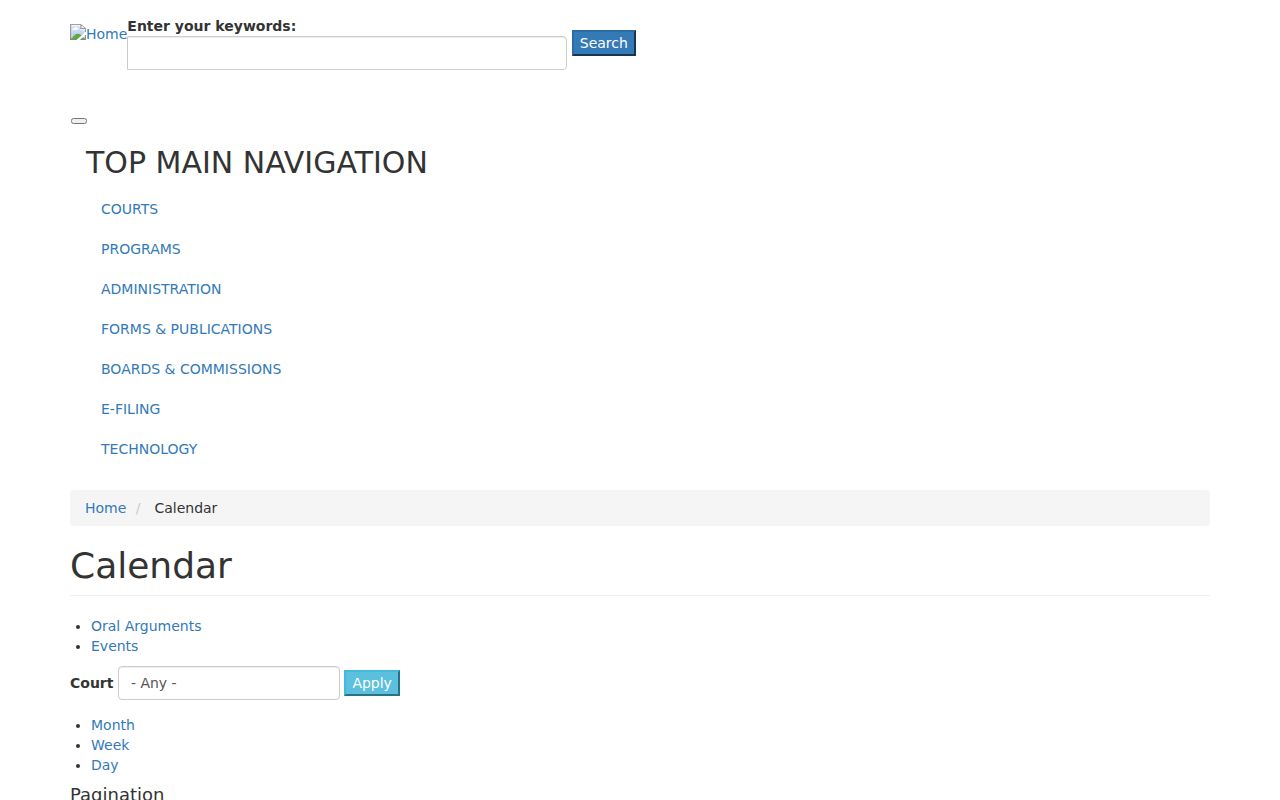
Remember the limit: filters on that state page do not create a Pickett County daily trial feed.
Pickett County Dates Are Not Outcomes
A date on a calendar proves nothing about what happened in court. It does not show that a trial occurred. Nor does it show that a judgment was entered. For that, read the later filings. Look there for a dismissal, judgment, plea, acquittal, transfer, or other disposition. The Pickett County case lookup walks through the clerk-first docket trail.
The distinction matters most when several entries share one day. An arraignment can produce a plea plus a later trial setting. A motion hearing can produce an order without ending the case. A docket call can place a matter on a future calendar. In Chancery Court, a matter not reached may simply be carried over. Record the event label. Then inspect the chronological entries that follow it.
Sometimes the public file does not yet show the result. Ask whether the order has been signed, entered, or filed. Those steps are not always simultaneous. A clerk can explain what the file contains. Staff cannot predict what the judge will do or interpret its legal effect. That discipline keeps a Pickett County court-date search anchored to court records rather than guesswork.
If You Miss a Court Setting
Call the proper clerk and your attorney right away. Give the case number. Ask what order was entered and whether another appearance is set. Staff can share procedural facts, but not legal advice.
Act promptly. A missed setting can lead to a failure-to-appear entry, warrant, bond action, default, or another court order.
Ask for the current docket entry and seek legal advice about the next step before appearing.
For sealed or juvenile matters, ask only for the public portion the court allows.
A missed criminal appearance can play out one way. A missed civil hearing can play out another. In one matter the docket may record a warrant or bond action. In another it may show a default, a dismissal, or a rescheduled hearing. Never infer the result from the hearing label. Ask what the judge entered, whether a written order exists, and which date now governs. If the clerk cannot tell a party what filing is required, ask a Tennessee lawyer. A lawyer can advise on the procedural response.
Pickett County Courthouse Date Checks
Location matters when you double-check a court date at the last minute. In Pickett County, the Circuit Court Clerk sits on the courthouse's lower level. The courtroom is upstairs. The Clerk and Master works out of Suite 203. Ask for the wrong desk and you may lose time. State your division and case type first. Circuit and Criminal files live with the Circuit Court Clerk. Chancery and probate records stay with the Clerk and Master.
The Pickett County officials directory lists contacts for each local office. When you confirm a setting, get the exact courtroom or hearing location. The clerk's suite is not always where court convenes. Also ask whether your appearance is in Byrdstown. For a Chancery Chambers matter, ask about the Cookeville schedule described in the local rules. Bring your current notice and case number along. An address on an old notice can be as stale as its date.
Archived Pickett County Calendar Research
A modern search screen will not surface every old Pickett County setting. The Tennessee State Library and Archives keeps microfilm inventories of county records. Local clerks may still hold paper indexes or older file series. A good historical request names the court. It should also give the approximate year, the case style, and any known case number. Ask which record is best. It may be a calendar, docket book, minute entry, or case file.
The official microfilm inventory directory helps you spot archived series. It is not a live court calendar. For a known local case, the clerk comes first. A record may have moved to an archive. Get the series title and date range before you call the archivist. That detail helps. It keeps a broad name request from being read as a plea to compile a new database.
Read historical calendar entries with the same care as current ones. A listed trial day proves only that a matter was scheduled. Minutes, orders, or a later docket entry show whether the court actually heard the case. They also reveal what followed.